
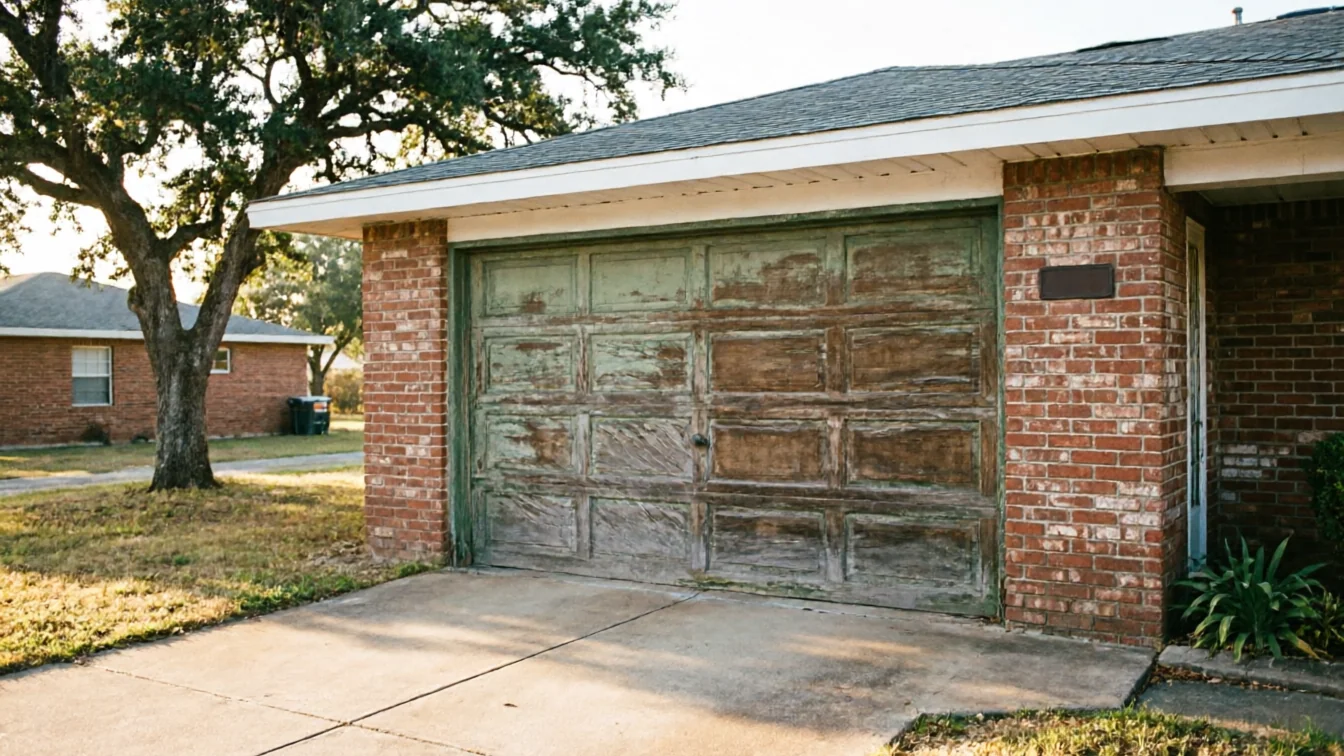
Tyler, TX · Garage Door Service
Is Your Tyler Garage Door Worth Fixing, or Time to Replace It
Most Tyler homes date to the 1980s and 90s. Here's how that build era and our mild winters decide whether your door is worth repairing or replacing.
- Repairs & new doors
- Springs & openers
- Serving 4 nearby communities
The Situation
Walk through most Tyler neighborhoods and you're looking at houses built somewhere between 1966 and 2008, with the median landing around 1988. That means the garage door on a lot of these homes is the second or third one it's had, but the opener and track hardware underneath is often original to a 1980s or 90s build. That matters because hardware from that era wasn't built to the same spring tension standards or safety-sensor requirements we install today.
When a homeowner calls and says the door is "just old," we're usually looking at one of two things: a door that's cosmetically tired but mechanically sound, or a door riding on a torsion spring and cable setup that's thirty-plus years old and due to fail, not might fail. The panel itself can often outlast the moving parts underneath it by a decade or more. That's the real question we're answering on every call - not how the door looks, but what's actually wearing out.
Across the service area we cover, from in-town Tyler out through Noonday, New Chapel Hill, and Whitehouse, that 1980s-90s stock is the baseline we size most repair-versus-replace decisions against.
When to Get Help
Call before the door fails completely, not after. A door that's sagging on one side, making a grinding noise on the way up, or slamming the last foot of travel is telling you the spring or cable is near the end of its life - and a door that drops suddenly on a 1980s-era torsion setup can do real damage to the frame or to whatever's underneath it.
If your opener is original to a house built in the median year around 1988, it's well past any reasonable service life, and parts for that generation of hardware are getting harder to source. At that point we're not patching it - we're telling you straight that replacement is the honest move, because a repair on hardware that old is money spent on a part that'll fail again in a year.
The one thing we won't do is talk you into replacing a door that's still got good years left in it just because it's inconvenient to diagnose. If the panel's solid and it's a spring or roller issue, that's a repair, not a sales pitch for a new door.
How Local Conditions Play In
Tyler sits in a mild climate band with occasional freeze days, not the deep-freeze cycles that crack steel panels or seize up hardware the way harsher climates do. That's good news for door longevity - we don't see the same rate of weatherstrip failure or metal fatigue from repeated freeze-thaw that colder regions deal with every winter.
What it does mean is that when a door from the 1980s or 90s stock finally does fail here, it's usually wear, not weather, that got it - years of cycles on the spring, dust and pollen buildup in the track, a roller that's worn its bearing out. Humidity plays a bigger role here than cold does, especially on doors with any wood trim or composite panel facing that can swell or delaminate over the years.
So when we're out at a house in Tyler or one of the surrounding spots like Chandler or Bullard, we're not checking for frost cracking the way a shop up north would. We're checking rollers, lubrication, and whether the hardware matches the age of the house it's bolted to.
What You Pay
We don't publish a flat price list here because the honest answer depends on what's actually wrong - a single roller swap and a full spring-and-cable job on a thirty-year-old double door are not the same bill, and anyone who quotes you one number before looking at the door is guessing.
What we can tell you is how we think about it: with median household income in the Tyler service area around $65,250, we try to steer people toward the repair that actually makes sense for the age of their door rather than the most expensive fix available. If your door is from the 1980s-90s stock that makes up most of this area and the opener's original, we'll tell you plainly when replacement costs less over five years than a string of repairs on hardware nobody makes parts for anymore.
The one limitation we're upfront about: we don't carry every obsolete spring size on the truck. Some older torsion springs from houses built in the 60s and 70s take a special order, and that can add a day or two to a job that would otherwise be same-visit.
Frequently asked questions
My house was built in the late 1980s - is the garage door original?
Probably not the door itself, but the opener and torsion hardware sometimes are. Median build year across the Tyler area is around 1988, and a lot of those houses still have opener units from that build. If yours hasn't been replaced, it's well past a reasonable service life and worth having checked before it fails outright.
Does Tyler's climate shorten garage door life?
Not the way cold-climate freeze-thaw cycles do. Tyler sits in a mild band with occasional freeze days, so we see less metal fatigue and weatherstrip cracking than colder regions. Wear from age and use is the bigger factor here - springs and rollers that have simply run their cycle count, not weather damage.
Is it cheaper to fix or replace an old double door?
Depends on what's failed. A roller or single cable is a straightforward repair worth doing on almost any door. A full spring-and-track job on hardware from the 1980s-90s stock that makes up most of this area, paired with an original opener, often costs more over a few years than replacing the whole unit once.
Related garage door services in Tyler
More garage door guides
Book garage door service in Tyler
Call now or request a quote - tell us what the door is doing and where you are.